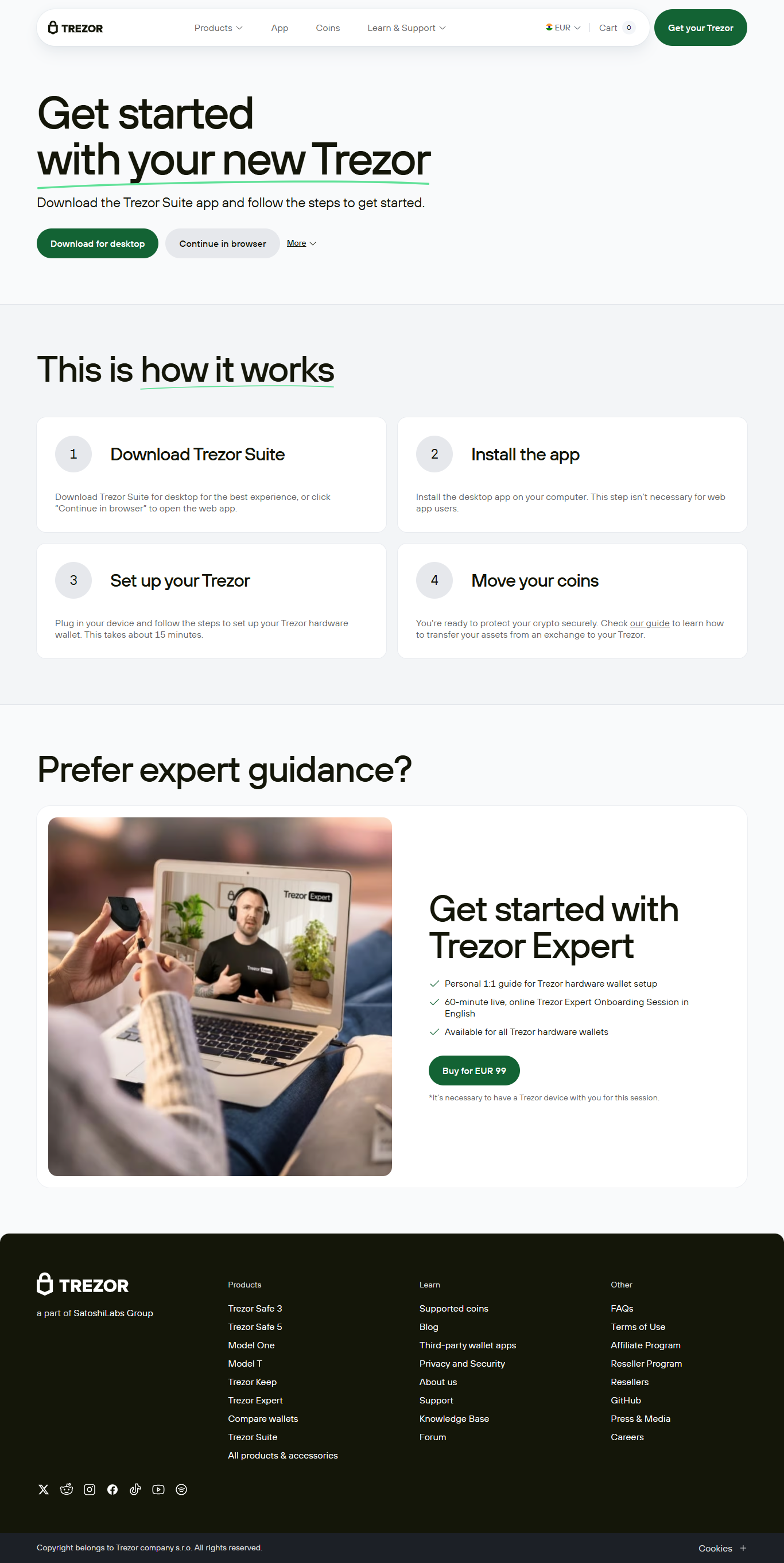
Trezor.io/start is the official setup portal for all Trezor hardware wallets, including the Trezor Model One, Trezor Model T, and the Trezor Safe 3. Whether you are a complete beginner or an experienced crypto investor, this page is the starting point for generating your wallet, installing firmware, downloading Trezor Suite, and securing your digital assets.
In this 2000+ word guide, you will learn everything about the Trezor.io/start process—from basic device setup to advanced security features such as passphrases, recovery seeds, PIN protection, and asset management. This detailed walkthrough ensures that you configure your hardware wallet correctly while avoiding common security risks such as phishing websites, fake support pages, or unverified apps.
Trezor.io/start is a dedicated onboarding page that provides step-by-step instructions for initializing your Trezor hardware wallet. Once you visit the page, it guides you through essential processes like firmware installation, wallet creation, and Trezor Suite setup.
The platform has a clean, beginner-friendly interface, making it easy for anyone—even users with no crypto background—to set up their wallet safely. Since Trezor is a hardware wallet, your private keys never leave the device, and Trezor.io/start ensures you complete every step securely.
The purpose of Trezor.io/start is to eliminate confusion and prevent users from falling into the trap of fake configuration websites. Always ensure you type the address manually or scan it from the official Trezor packaging.
Before diving into the Trezor.io/start process, it’s important to understand why millions of crypto users trust Trezor as their primary hardware wallet. Unlike mobile or browser-based wallets (hot wallets), Trezor is a cold wallet, which means your private keys never touch the internet.
Trezor provides unmatched protection, particularly against malware, phishing attacks, and unauthorized access. It is considered one of the safest long-term storage solutions for crypto assets.
Open your browser and manually enter https://trezor.io/start. Double-check the address bar for accuracy. Avoid clicking links from emails, Telegram messages, or social media as they may lead to phishing pages designed to steal your recovery seed.
Use the USB cable included with your Trezor package. Once connected, your device will turn on and display a welcome screen. Follow the on-screen prompts.
Trezor.io/start directs you to download Trezor Suite—available for Windows, macOS, and Linux. This application acts as your command center where you can manage crypto assets, review transactions, monitor market charts, and adjust wallet settings.
For security reasons, new Trezor devices come without pre-installed firmware. During setup, Trezor Suite will ask you to install the official firmware. Always verify details on your device screen to ensure authenticity.
Once your firmware is installed, the app will prompt you to create a new wallet. Choose the option “Create new wallet”. The device will then generate your recovery seed.
Your recovery seed is a list of 12, 18, or 24 words displayed on the Trezor screen. This is the only backup of your wallet. Write it down on the supplied recovery card or keep it in a secure offline location.
Never:
Anyone who gains access to this seed can restore your wallet and steal your funds.
Set up a secure PIN (4–10 digits). The PIN layout appears scrambled for each login to prevent screen recording attacks. If someone enters an incorrect PIN multiple times, the device will temporarily lock.
You now have full access to your wallet. You can check balances, manage assets, view transaction history, buy crypto, or exchange coins—all from one secure interface.
After completing setup, Trezor.io/start integrates seamlessly with Trezor Suite, unlocking powerful tools for managing your crypto securely.
Trezor Suite supports Bitcoin, Ethereum, Litecoin, Dogecoin, Cardano, ERC-20 tokens, and various other digital assets. You can send, receive, and monitor your holdings in real time.
Through trusted partners integrated directly into Trezor Suite, you can purchase crypto with fiat currency and have it deposited straight into your wallet—avoiding centralized exchanges.
Swap assets internally without sending them to external platforms. This minimizes risk and avoids unnecessary exposure to the internet.
Trezor Suite includes Tor integration, allowing users to route traffic through anonymous networks for enhanced privacy. It also features address labeling, hidden wallets, and secure passphrase options.
A complete real-time overview of your crypto portfolio, including price charts and historical performance.
A passphrase acts as an extra word added to your recovery seed, creating a completely separate hidden wallet. Even if someone steals your recovery seed, they cannot access your hidden wallet without knowing the passphrase.
Instead of a single seed phrase, Trezor allows you to split your backup into multiple shares. This prevents complete wallet loss even if one backup is compromised.
For users who want total privacy, Trezor supports creating multiple hidden wallets protected by unique passphrases.
The desktop version provides maximum security, while the web version offers convenience and accessibility.
Try switching USB cables or using another port. Make sure Trezor Suite or Trezor Bridge is installed correctly.
Reinstall firmware from Trezor Suite. Make sure you are not using outdated cables that interrupt USB connection.
Take your time. Each wrong attempt increases delay time to discourage brute-force attacks.
If you have no seed backup, Trezor cannot restore your wallet. This is why securely writing down your seed during setup is essential.
Trezor.io/start is the official and safest portal to begin your crypto journey with a Trezor hardware wallet. By carefully following the setup instructions, you protect yourself from online threats, phishing scams, malware, and unauthorized access. Trezor’s combination of offline security, open-source transparency, and Trezor Suite integration makes it one of the best solutions for long-term crypto storage.
Whether you are storing Bitcoin, Ethereum, stablecoins, or a diverse portfolio of digital assets, Trezor ensures your funds remain safe, secure, and completely under your control. Always start with Trezor.io/start and follow recommended security practices for maximum protection.